

Content originally published by Fast Company
From July 14 to November 9, 2023, the American actors’ union SAG-AFTRA, representing 160,000 people, went on strike over a labor dispute with the Alliance of Motion Picture and Television Producers. Eventually, both sides agreed to terms that theoretically would put limits on how an actor’s images and output could be used. Strike over, everybody went back to work and the entertainment industrial complex started humming again. But they apparently never took heed of the lessons offered by a somewhat obscure 2013 movie, The Congress, which eerily anticipated the crisis Hollywood is now facing.
Caught by surprise? Really?
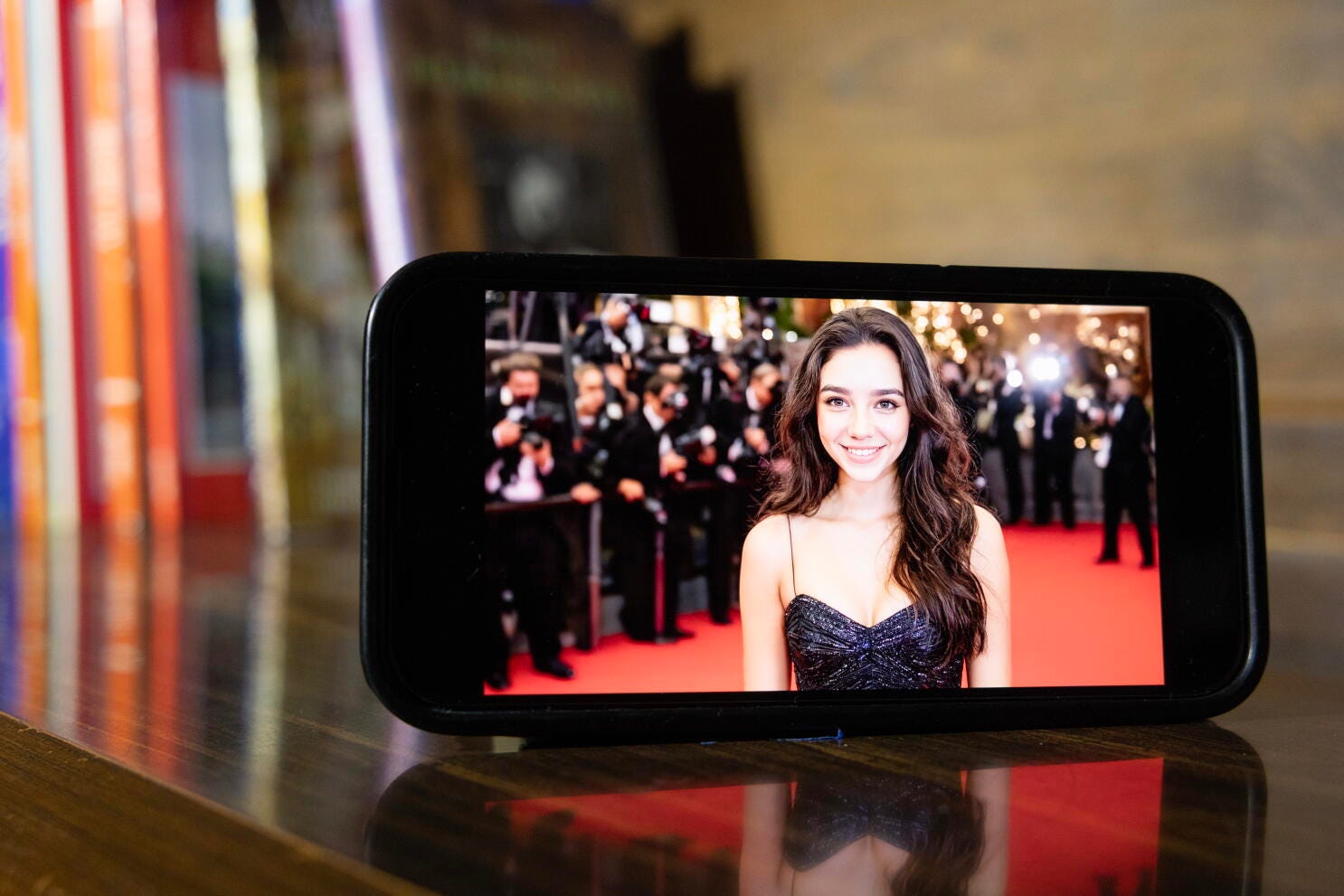
Fast-forward to September of 2025. Dutch actor and comedian Eline Van der Velden’s company Particle6 released an AI “actor” named Tilly Norwood with the express intention of her becoming the “next Scarlett Johansson.” The bot had its own social media presence, appeared in comedy sketches, and breathlessly declared, “I may be AI, but I’m feeling very real emotions right now. I am so excited for what’s coming next!”
The news that there were agents in talks to sign Norwood, the way they might sign a real actor, sparked an incredible Hollywood firestorm. Lots of denunciations of this use of technology. Lots of claims that this was unfair. And lots and lots of workplace anxiety. But should they really have been this surprised? Futurist Amy Webb suggests not. As she says, “Let’s not kid ourselves: they’ve had more than a decade to prepare for this.”
Toy Story, launched in 1995, was the first full-length feature film to be fully animated, followed by a string of other hits that did very well without real actors, thank you very much. Lara Croft, the Tomb Raider game star that was launched in 1996, became a movie character in 2001. In 2002, a simulated movie star played the lead in the science fiction movie Simone. In 2011, Japanese idol group AKB48 introduced a new member—Aimi Eguchi. She became popular and was “added” to the band only to “graduate” when her identity as a composite of the band’s other actors was revealed. By 2016, we had AI-generated influencers like Lil Miquela who appear in advertisements, garner thousands of followers, and are paid to endorse brands. And the precedent for Tilly signing with an agent has already been established—Miquela signed on with CAA as its first virtual client as far back as 2020.
Willful blind spots
Now seemingly caught by surprise, what did the strategists in Hollywood miss?
Most likely, too much focus on their own industry. Fractious labor relations, contract negotiations, and changing entertainment consumption behavior can eat up a lot of executive bandwidth. This leads to not thinking in terms of the larger arenas in which competition takes place. The big threat to this business was not other industry players but something coming along that made what they did unnecessary, undesirable, or too expensive.
Once an innovation has demonstrated its efficacy, particularly if it is popular and making money for someone, it is almost impossible to put the genie back in its bottle (see: targeted Internet advertising or ride-sharing).
It is also no secret that some moviemakers longed to put AI-generated actors in leading roles, even experimenting with bringing some back from the dead.
But perhaps the most significant reason I believe they didn’t pick up on the weak signals is because they didn’t want to. Accepting the idea of digital acting and the creation of digital worlds means accepting the idea that expertise, talent, and painfully acquired skills will become obsolete. Unfortunately, the law of disruption—in which the complicated and difficult becomes easy and the expensive becomes cheap—doesn’t really care about your preferences.
Preparing for an existential threat
What might they have done to prepare? They could have launched small-scale experiments using digital actors to learn about audience acceptance, production workflows, and creative possibilities. They could have allocated resources to dedicated teams exploring new forms of storytelling. With the constraints of physical acting and reality removed, stories could be developed that could be as revolutionary as the movies themselves were when they created new possibilities beyond what could be done on a physical stage. They could have worked with regulators and their unions to establish a glide path for AI in their sector that would be fair with respect to intellectual property. They could have seriously invested in the digital technologies used to create these new forms of entertainment, rather than leaving all this to technology companies such as Netflix.
The end of mass market entertainment?
Tilly Norwood isn’t the disruption—she’s the warning shot. The real disruption comes when AI can generate not just actors, but entire films, on demand, personalized to individual viewer preferences, at essentially zero marginal cost.
The studios that survive won’t be the ones with the biggest IP libraries or the most prestigious awards. They’ll be the ones who recognize that the fundamental assumptions of their industry—that content is scarce, that talent is human, that stories are fixed—are all being systematically dismantled, and come up with new business models that take advantage of the post-inflection point world.
The weak signals are there. The question is: who has the appetite to listen?
There are other weak signals.
* LinkedIn members turning away from AI generated content; vehemently denigrating those who use it.
* A resurgence in the appetite for human art that has emerged in lock-step with evolution of AI generating paintings.
* A surge in the appetite for IRL experiences amongst Gen Z and Millennials - think run clubs, coffee dates, sober cafes.
* In 2025, U.S. vinyl revenues officially crossed the $1 billion mark for the first time this century, accounting for more than half of all physical album sales.
Hollywood isn't going away because AI movies will necessarily be bad. Some will. Some won't.
Hollywood isn't going away for the same reason the Pirates of the Carribbean series was such a hit in a world of RPG games and the Marvel universe. Or the best part of the Deadpool and Wolverine movie is the real life camaraderie between the two human stars. We'll be entertained out of boredom by AI and computer generated animations only so long as the price we're asked to pay matches the relative human effort needed to create it. And that perceived effort is dropping like a lead brick.
Hollywood WILL change. And change more than some are hoping. With a little luck (and public pressure) that change will involve reinvesting in new stories by real human writers, not AI generated dialogue plagiarized from a training set. A cast filled with real humans with real, visible chemistry. And new dialogue improvised on the spot by a real human actor when the line on the page doesn't translate.
Or maybe we'll see a return to going to the theatre. Demand for tickets is up significantly despite the very real financial economic challenges involved in running a theatre company. That may already be a weak signal worth watching.
What separates a film (and theatre) from a personal fantasy is that it's a shared experience and a collaborative effort. That collaboration is what captivates audiences hearts along with their minds.
Meanwhile, a private movie created by and for one person is nothing new. We used to call them fantasies - those imaginary scenarios each one of us carries around in our heads, designed purely for an audience of one. But the thing about fantasies is that they're uncensored and, for some people at least, the place where their darkest impulses are allowed to roam free.
I'm not sure I want my neighbour's most perverse thoughts brought to life and streamed into my living room via Youtube in full hi def. Or a woman's stalker to have the option to download a photo from social media and use it to bring their fantasy to life in glorious, lifelike, AI-generated video.
That's a lie. I am sure. I don't want to see either of those things come to pass. But both of them will. In fact, both of them already are. Money and greed will ensure it.